Aggression. Anxiety. Reactivity. This Is What I Do.
If your dog growls, lunges, snaps, panics, or has already bitten someone, you are not dealing with a bad dog and you have not failed. You are dealing with behavior that has a reason behind it. My job is to find that reason and build a plan that changes it, in your home and your neighborhood, where the hard moments actually happen.
I answer every text personally, usually the same day: (817) 217-8542
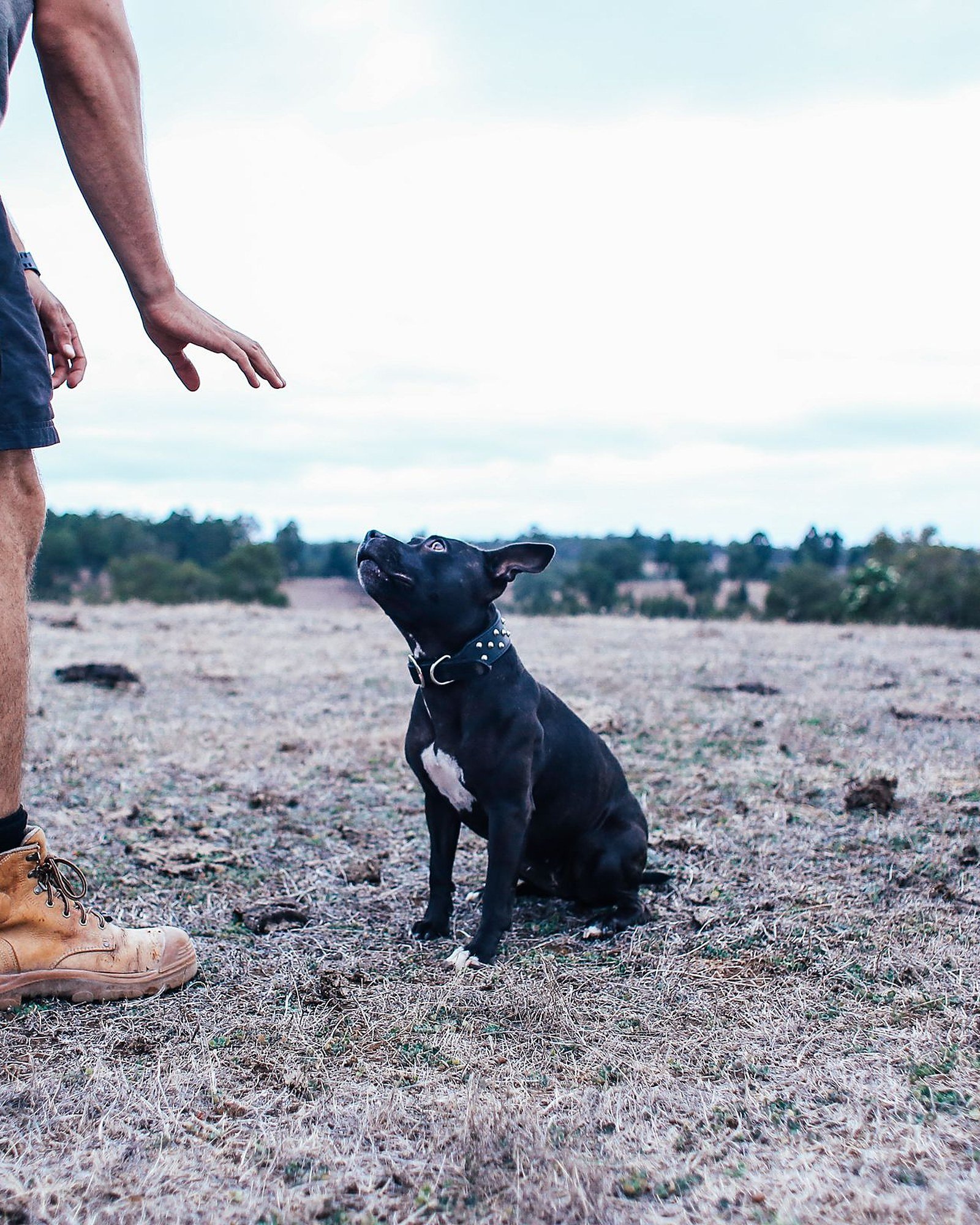
You've reorganized your whole life around your dog's behavior
You walk at odd hours
Six in the morning. Ten at night. You know which streets are empty and which neighbor lets their dog out front. A walk stopped being a walk a long time ago and became a tactical operation.
The doorbell makes your stomach drop
Guests get warned. Family visits get managed. Somebody always has to hold the dog, or the dog goes in the back room, and you spend the whole visit half-listening for a sound.
You've been told to rehome them
Maybe a trainer turned you down. Maybe someone suggested that this is just who your dog is. You are still here looking for answers, which tells me you have not given up on them. That matters more than you think.
None of that means you have a bad dog. It means nobody has shown you what is driving it yet.
Behavior modification isn't about control. It's about understanding.
Real behavior work is not about dominance, intimidation, or forcing a dog into submission. Punishing a growl can suppress an important warning without changing what the dog is feeling underneath it. That can make future escalation harder to recognize, not safer.
Aggression, reactivity, and panic can be shaped by emotion, physical discomfort, learning history, environment, genetics, and what the behavior has accomplished before. The job is to identify the factors we can change, manage the risks we cannot remove overnight, and teach safer, more workable responses.
- The emotional state behind the behavior
- The patterns your dog has already learned
- The environment your dog operates in
- Communication between dog and handler
- Threshold and trigger management
- Desensitization and counter-conditioning
- Building new, reliable response patterns
- Coaching you through the handling skills
Complex behavior deserves specialized care
Here is what is usually happening underneath the behavior you are seeing at home.
Aggression and bite history
Growling, snapping, lunging, or bites directed at people or other dogs. On leash, off leash, at the door, or what seems to come out of nowhere.
Often distance-increasing behavior: your dog is trying to make something go away. Sometimes that pattern has been rehearsed for years, sometimes it has not, and part of my job is working out which. Sudden or escalating aggression also warrants a veterinary exam, because pain changes behavior and I would rather rule it out than train around it. We respect the warning signals that are already there, reduce the situations that force your dog to escalate, teach safer alternatives, and put real management in place while the work happens.
Leash reactivity and barrier frustration
Barking, lunging, and spinning the second another dog or person appears. Fence fighting, window barking, or a dog who is fine off leash and impossible on it.
The leash or the fence removes your dog's ability to create distance or make contact. For some dogs that is pure frustration; for others it is fear with the escape route taken away, and the plan differs depending on which one you have. We work at the distance where your dog can still think, then close that distance on your dog's timeline instead of ours.
Fear, anxiety, and phobias
Hiding, shutting down, refusing to move, trembling at storms or fireworks, or panic around strangers, vets, and handling.
A nervous system stuck in threat mode. You cannot obedience-train your way out of fear, and pushing a scared dog through it tends to backfire. We lower the intensity until your dog can succeed, then build up carefully, and we loop in your veterinarian when the anxiety load calls for it.
Resource guarding
Stiffening, freezing, growling, or snapping over food, bones, toys, furniture, or a favorite person.
Your dog believes the valuable thing is about to be taken. The old advice to take the bowl away to prove a point was wrong, and if that is what you were told to do, that is not on you. We teach your dog that your approach predicts more, not less, and we do it without ever setting up a confrontation.
Separation anxiety
Panic when you pick up your keys. Destruction at the door, howling, drooling, or accidents from a fully house-trained dog the moment they are alone.
Separation anxiety can involve panic-level distress, not disobedience or spite. It needs its own protocol built on gradual absences rather than crate drills, and it is worth ruling out medical causes with your veterinarian first, since a house-trained dog having accidents is sometimes a medical issue rather than a behavioral one. Dogs with separation-related distress can improve with an individualized plan, but progress is often slow and uneven, and I will tell you that up front.
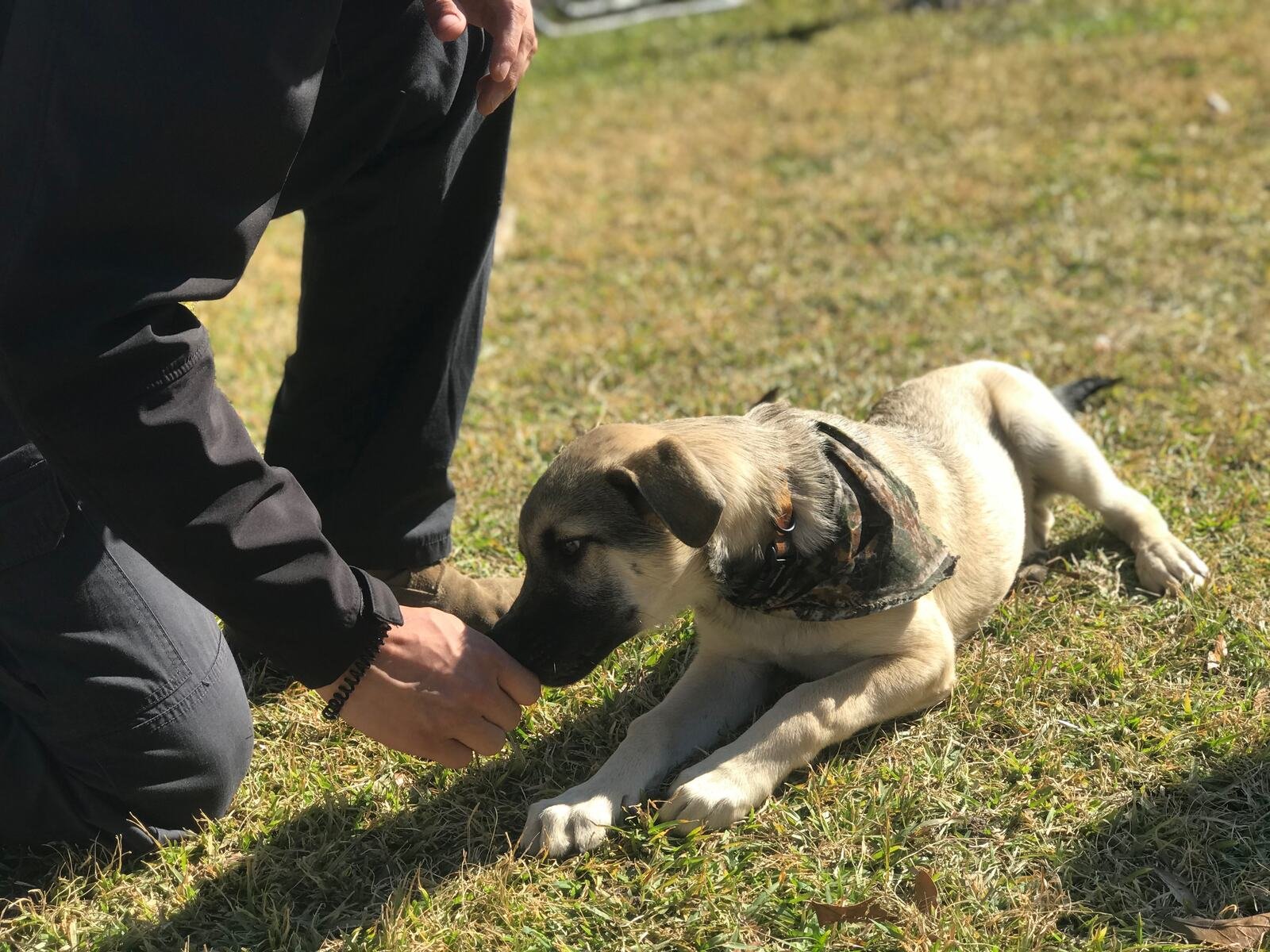
We train where the problem happens: your home, your yard, your street.
Three steps, starting with a conversation
You reach out
Call, text, or send the form. I read every message myself and reply personally, usually the same day, and I send you the behavior questionnaire so I can read your dog's history before we ever meet.
Your free consultation
About forty-five minutes, held online, and free. I have already read your questionnaire, so the time goes on your dog rather than on paperwork: I watch them in their real environment and take the history further where it matters. You leave with a written management and safety plan and a clear picture of what we are working with.
Your Behavioral Rehabilitation program
Ten private sessions built around your dog specifically, with coaching for you between visits. Behavior change happens in repetitions over weeks, not in one dramatic session.
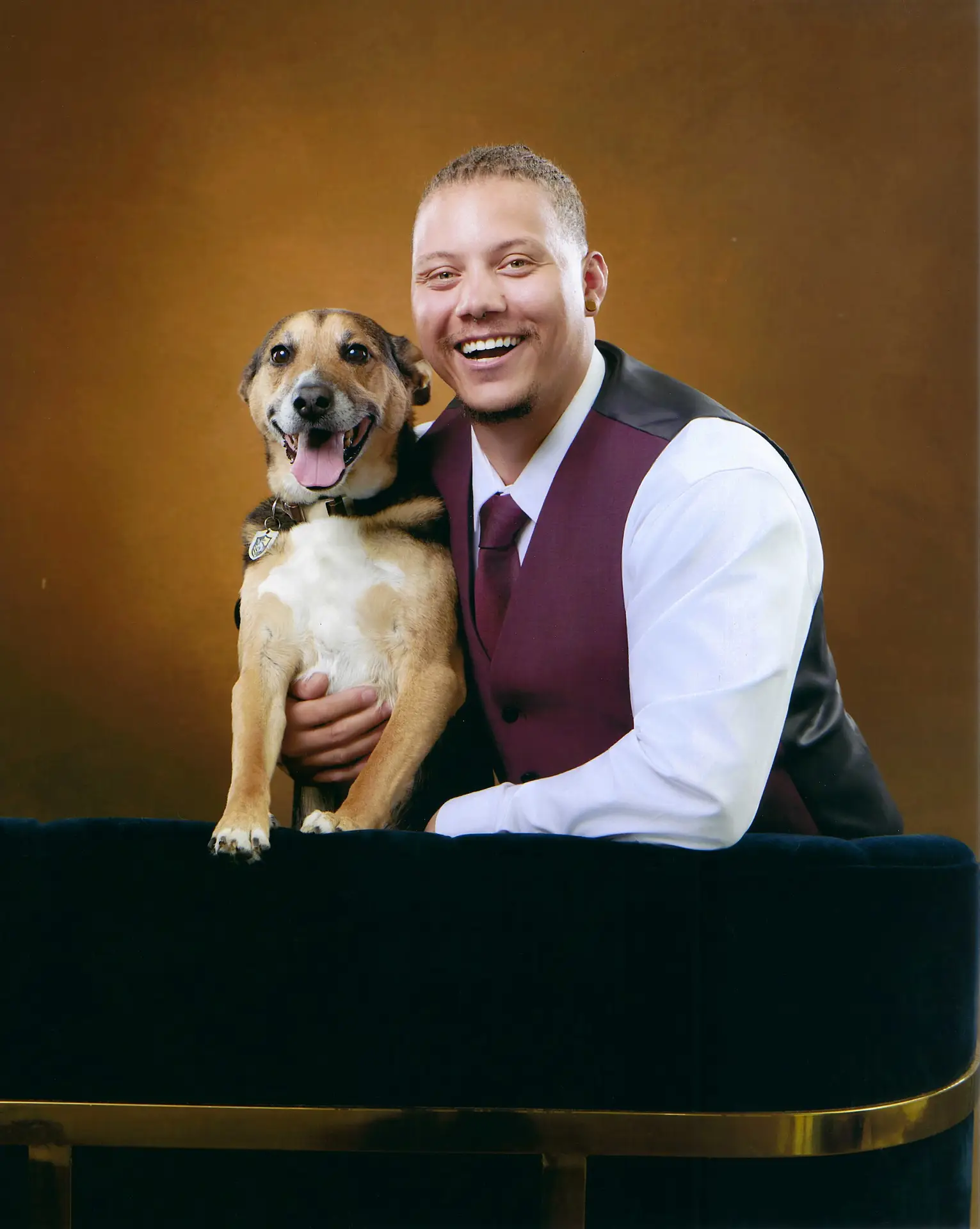
The Free Consultation
Serious behavior cases deserve an individual assessment before anyone commits to a program: your dog's history, what you are seeing at home, safety considerations, and whether I am the right person to help. You never have to provoke a reaction to show me what your dog can do.
There is nothing to pay for it and no card required. All I ask is that the behavior questionnaire comes back before we meet, and that you tell me as early as you can if something comes up so we can move the appointment rather than lose the slot.
No charge, no card, and nothing owed if you decide not to continue.
Request Your ConsultDon't take my word for it
"Before working with Jordan, we were in a really tough spot with our dog Lexi. She had attacked a neighbor's dog and had bitten multiple people, and we felt completely overwhelmed and honestly a little hopeless. Jordan came in with zero judgment and immediately gave us direction."
Lexi's Family · DFW · Aggression & Bite History"Leash walking was a nightmare. Jordan actually understood what was going on with him instead of just trying to force compliance. He explained why Yuki was responding the way he was, which honestly helped me understand my own dog better. He's actually manageable now and making progress with other people too."
Jenna Hiniker · Yuki · Leash ReactivityWhat I promise, and what I don't
Steller Dog Training is me, Jordan Marsteller, and every session is run by me personally. Dogs with bite histories are welcome here. Muzzle-trained dogs are welcome here, and if your dog is not muzzle trained yet, I will teach you both how. If your dog has bitten before, tell me before we meet so I can plan the first visit safely for everyone, including your dog.
No e-collars. No prong collars. I do not use fear, pain, or intimidation as training tools, not as a last resort and not ever. When a case needs veterinary support, I work with your veterinarian instead of pretending to replace them, and when a case needs more than behavior training can give it, I will tell you and point you toward a board-certified veterinary behaviorist. And I will not promise you a finished dog by a certain date. Real behavior change is a process, progress is not a straight line, and anyone who guarantees results in this field is selling you something.
I also want to be direct about something most training pages leave out: no trainer, myself included, can guarantee a dog will never bite again. Behavior work is intended to reduce risk, not eliminate it. Management remains part of the plan, and you are responsible for following the safety recommendations we build together between sessions. You will hear that from me on day one, not after something happens.
What I do promise: an honest read on your dog, a plan grounded in behavior science, and my full attention for every session we work together.
Transparent pricing, out in the open
Step One
The Program
The consultation is free. If you continue, Behavioral Rehabilitation is $1,995, and that is the whole of it. Nothing is paid before the program itself, and it can be taken as three monthly payments of $665. No surprise training charges are added to the program. If I recommend anything outside it, you will know why and what it costs before you decide. Full details and every other program live on the Training Packages page.
Where to go next
Tell me what's going on with your dog
One text is enough to get started. Worst case, you get honest advice from a professional. Best case, this is the day it starts getting better for both of you.
Prefer to talk? Call (817) 217-8542